
Marijuana addiction can develop gradually, often starting as casual or social use before turning into a pattern that feels difficult to control. When cannabis begins to affect mental health, relationships, motivation, or daily responsibilities, it may be time to seek professional support. The good news is that recovery is not one-size-fits-all. Inpatient, outpatient, and faith-based treatment options all offer meaningful pathways to healing, depending on each person’s needs and circumstances.
Understanding Marijuana Addiction and When to Seek Help
Cannabis use can affect the brain’s reward system, making it harder over time to stop even when negative consequences appear. Many individuals do not realize dependence has formed until they try to cut back and struggle.
Common Signs of Marijuana Dependence
Some early indicators include:
- Needing marijuana to relax, sleep, or cope with stress
- Difficulty reducing or stopping use
- Increased tolerance requiring more frequent use
- Anxiety, irritability, or restlessness when not using
- Declining performance at work, school, or home responsibilities
Recognizing these signs early can make recovery more manageable and reduce the risk of long term challenges.
Inpatient Treatment for Marijuana Addiction
Inpatient treatment provides a structured and supportive environment where individuals can focus fully on recovery. This level of care is often recommended for those experiencing moderate to severe dependence or co occurring mental health concerns.
What to Expect in Inpatient Care
Inpatient programs typically include:
- 24 hour clinical and emotional support
- Individual and group therapy sessions
- Education on addiction and coping strategies
- A structured daily routine that supports stability
- Relapse prevention planning
This immersive environment removes outside distractions and helps individuals build a strong foundation for long term recovery.
Benefits of Inpatient Treatment
Inpatient care allows individuals to step away from triggers and focus entirely on healing. It also provides immediate access to mental health professionals, which is especially important for those dealing with anxiety, depression, or trauma alongside marijuana addiction.
Outpatient Treatment: Flexible Support for Recovery
Outpatient programs offer structured treatment while allowing individuals to continue their daily responsibilities. This option is ideal for those with mild to moderate dependence or for individuals transitioning from inpatient care.
How Outpatient Programs Work
Outpatient care may include:
- Weekly or regular therapy sessions
- Group counseling and peer support
- Mental health treatment and medication management if needed
- Relapse prevention and coping skills training
This flexibility allows individuals to maintain work, school, or family commitments while receiving consistent support.
Why Outpatient Care Works
Outpatient treatment helps individuals apply recovery skills in real time. By facing daily challenges while receiving guidance, clients can build confidence and long term resilience.
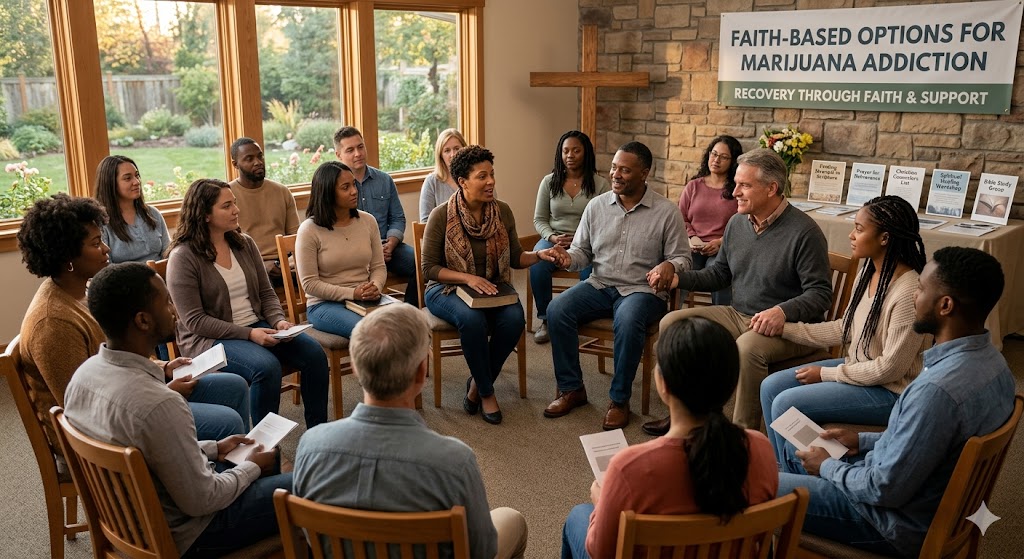
Faith-Based Support in Marijuana Addiction Recovery
Faith-based treatment offers a spiritual dimension to recovery that can be deeply meaningful for many individuals. It focuses on healing through purpose, connection, and inner strength.
The Role of Spiritual Support
Faith-based programs may include:
- Spiritual counseling and guidance
- Prayer or meditation practices
- Community support and fellowship
- Values based recovery planning
This approach can provide hope and encouragement, especially during difficult stages of recovery.
Combining Faith and Clinical Care
Faith-based support is often most effective when combined with clinical treatment. This integrated approach addresses both emotional healing and spiritual growth, creating a more balanced recovery experience.
Choosing the Right Path for Recovery
There is no single path to overcoming marijuana addiction. The right treatment depends on individual needs, mental health status, and personal goals.
Factors to Consider
When choosing a treatment option, consider:
- Severity of marijuana use and withdrawal symptoms
- Presence of co occurring mental health conditions
- Daily responsibilities and support system
- Personal beliefs and values
- Level of structure needed for recovery
A professional assessment can help determine the most effective level of care.
Conclusion
Marijuana addiction can affect many areas of life, but recovery is absolutely possible with the right support. Whether through inpatient care, outpatient programs, or faith-based healing, each path offers tools to help individuals regain control, restore mental health, and rebuild their lives.
Granite Marbles provides compassionate, individualized treatment through inpatient, outpatient, holistic, and faith-based programs designed to meet people where they are in their recovery journey. If marijuana use is beginning to feel difficult to manage, reaching out for help is a powerful first step toward lasting change, stability, and renewed hope.